Stock
Warranty terms
A shop defines its own warranty terms, each with a length in days, months or years, or lifetime. Applying a term to an item means every unit sold carries an expiry date worked out at the point of sale and stored on that unit.
What it does
Warranty arguments happen because nobody wrote the term down at the time. A note saying six months does not say six months from when.
Terms are defined once, with a label and a length. Thirty days, six months, one year, lifetime. Use the words your shop already uses.
The expiry is calculated when the unit is sold and stored on that unit. Changing the term later does not rewrite what a customer was already given.
Combo products can carry their own warranty instead of inheriting whatever their components had.
Every capability
| Terms | Defined per shop, with your own labels |
|---|---|
| Length | In days, months or years, or lifetime |
| Applied | Per inventory item |
| Expiry | Worked out at the point of sale and stored on the unit |
| History | Changing a term does not alter warranties already given |
| Combos | Can carry their own term rather than their components' |
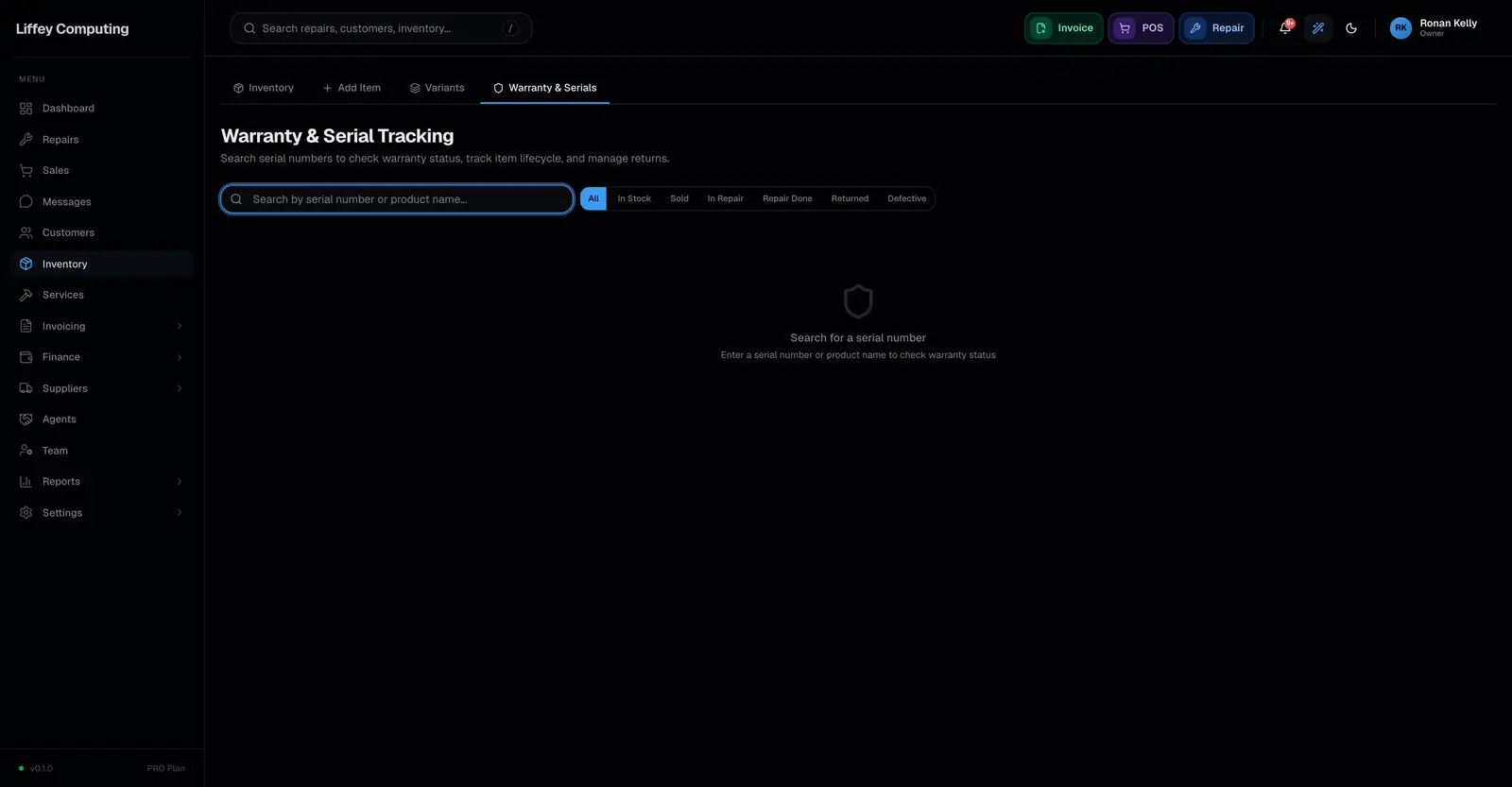
| Lookup | Find a unit by serial and see whether it is still covered |
Questions
What does lifetime mean here?
A term with no expiry date. The unit records that it is covered without a date to compare against.
If I change a term from six months to a year, what happens to past sales?
Nothing. The expiry was worked out and stored when the unit was sold, so past customers keep exactly what they were sold.
Can I check a warranty without the receipt?
Yes, if the item has a serial number. Search the serial and the unit shows its expiry and the sale it came from.