On the bench and at the counter
Encrypted passcodes and patterns
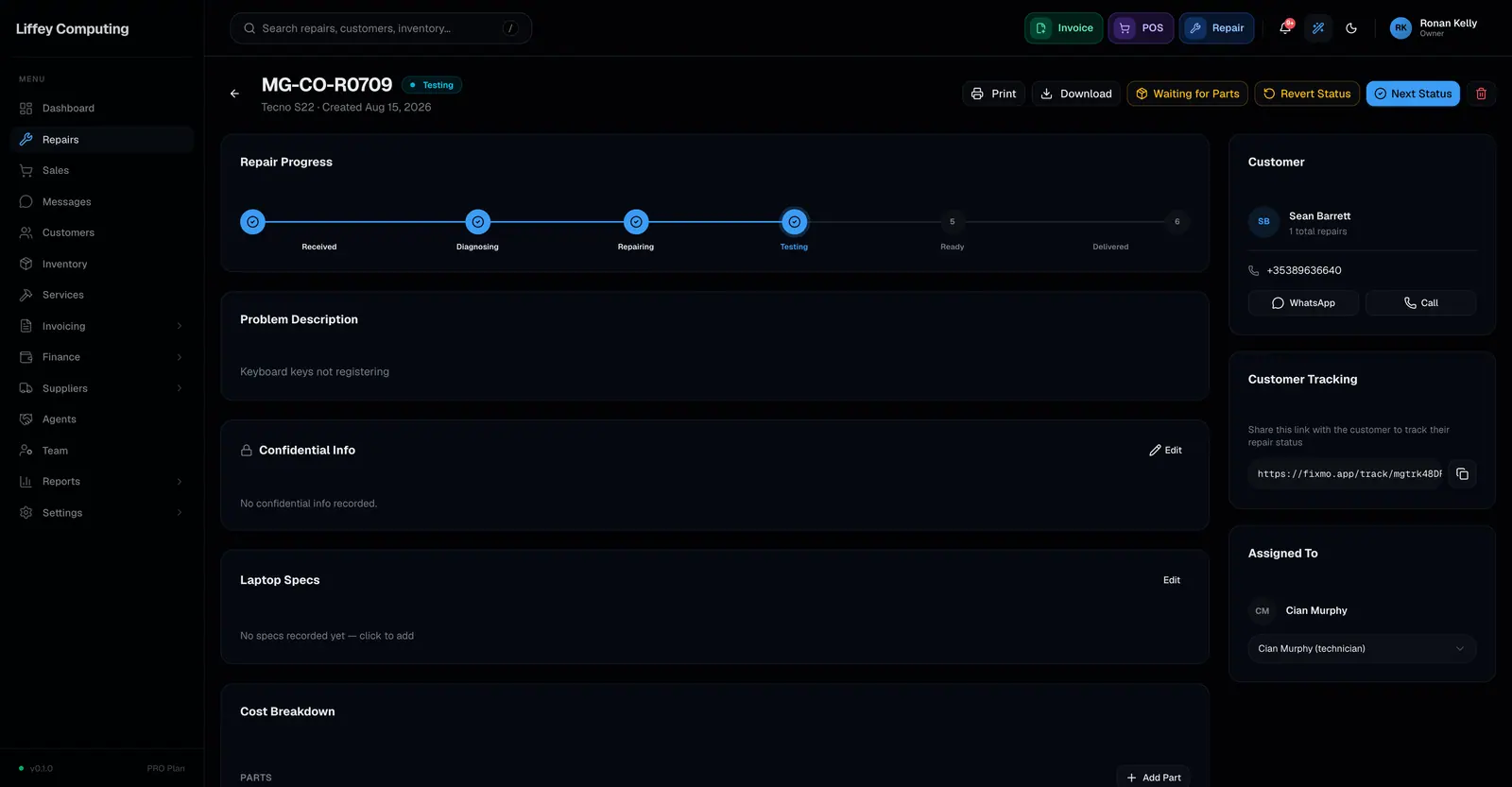
A repair can hold the customer's device passcode or unlock pattern in an encrypted field. It is stored separately from the rest of the repair, it is not shown to every role, and changes to it are recorded in the job's activity log.
What it does
A technician usually needs to get into the device. That means the shop ends up holding a passcode, and most shops hold it on the bag, on a whiteboard, or in a group chat.
Fixmo keeps it in its own encrypted record attached to the repair. Text passcodes and Android unlock patterns are stored separately, because they are entered differently.
Access is a permission, not a role. Someone who can open a repair does not automatically get the passcode, and a cashier does not even see the log row saying it changed.
When the repair is deleted, the encrypted record goes with it.
Every capability
| Stored | Encrypted, in a record separate from the repair itself |
|---|---|
| Passcode | Text passcodes and PINs |
| Pattern | Android unlock patterns, stored separately from text |
| Access | Controlled by the repairs.confidential.view permission |
| Cashier | Cannot see the field, and cannot see that it changed |
| Audit | A confidential updated row is written to the repair activity log |
| Deletion | Removed with the repair it belongs to |
Questions
Who can see a stored passcode?
Only a user whose permissions include viewing confidential repair information. That is set per role and can be overridden per person.
Can I run a shop without storing passcodes at all?
Yes. The field is optional and can be left empty on every repair.
Is the pattern stored as a picture?
No. It is stored as encrypted data in its own field, kept apart from text passcodes because the two are entered in different ways.